
Off-site construction
- To meet our climate challenges, our low-carbon objectives and the expectations of our customers and the market,
Eiffage Construction has been using off-site construction in its projects for several years.
Off-site construction: a strategic lever
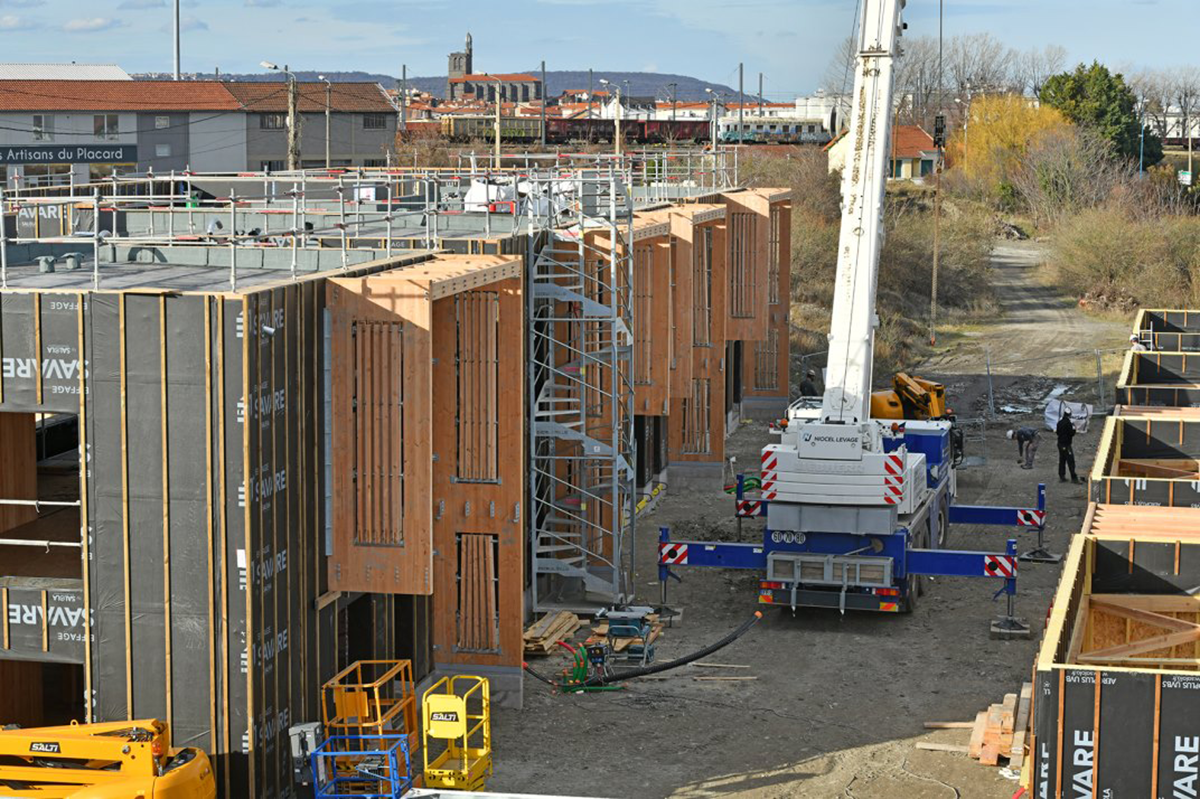
To ensure complete control over all types of projects and as part of our low-carbon construction approach, we have been incorporating off-site solutions into our construction methods for many years.
Off-site construction is based on the prefabrication of elements in a factory (such as walls, facades and other modules) that are then assembled on site.
Eiffage Construction combines different construction processes using wood, concrete, modular elements and hybrid materials.
Off-site construction for both new builds and refurbishments
Incorporating off-site construction methods is revolutionising the way we approach new-build projects, building refurbishment and energy-efficient renovation.
Whether it is to modernise existing structures, drastically improve their energy performance or erect new buildings with unrivalled efficiency, off-site construction offers innovative, sustainable and environmentally friendly solutions, in line with our commitments to innovation and sustainable development.
The benefits of off-site construction
-
Quality:
Off-site construction guarantees industrial quality with millimetre precision and frequent factory checks. This significantly reduces reservations and controls risks on construction sites thanks to optimised execution.
-
Speed:
The construction process is significantly faster, resulting in a significant reduction in the overall project timeframe.
-
The environment:
Off-site construction promotes the use of carbon-free materials, facilitating compliance with environmental regulations. In addition, industrialisation reduces logistics flows (human and material), contributing to the decongestion of cities. Industrial products are easier to dismantle, encouraging reuse and enabling the creation of movable or reversible projects.
-
Costs:
A collaborative and forward-thinking phase of work upstream is essential. This effort optimises design and controls costs throughout the project lifecycle.
-
Reduced disruption:
Off-site construction significantly reduces disruption for local residents and communities (dust, waste, visual and noise pollution), which is particularly valuable for renovation projects in occupied sites and projects in dense urban environments.
-
Design:
Innovation and customisation are not sacrificed; on the contrary, off-site construction allows for the design of varied, unique and tailor-made buildings, comparable to traditional construction.
Some achievements incorporating off-site construction processes in our projects

-
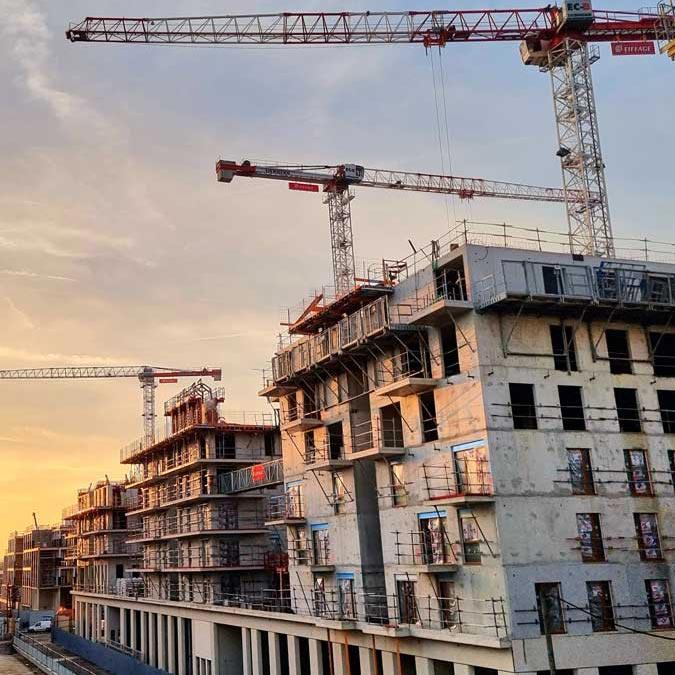 New build Property development Off-site construction
Saint-Ouen-sur-Seine (Seine-saint-Denis) - Athletes' and Para-athletes' Village - Sector E ‘Les Belvédères’
Sector E of the Athletes' Village made extensive use of off-site construction processes to optimise deadlines, reduce the environmental footprint and guarantee high-quality construction, notably using:
- Wood frame walls (Savare)
- Mixed wood/aluminium façades (Goyer and Savare)
- Mixed wood/low-carbon concrete posts and beams (Savare)
- Off-site bathroom modules (HVA Concept)
-
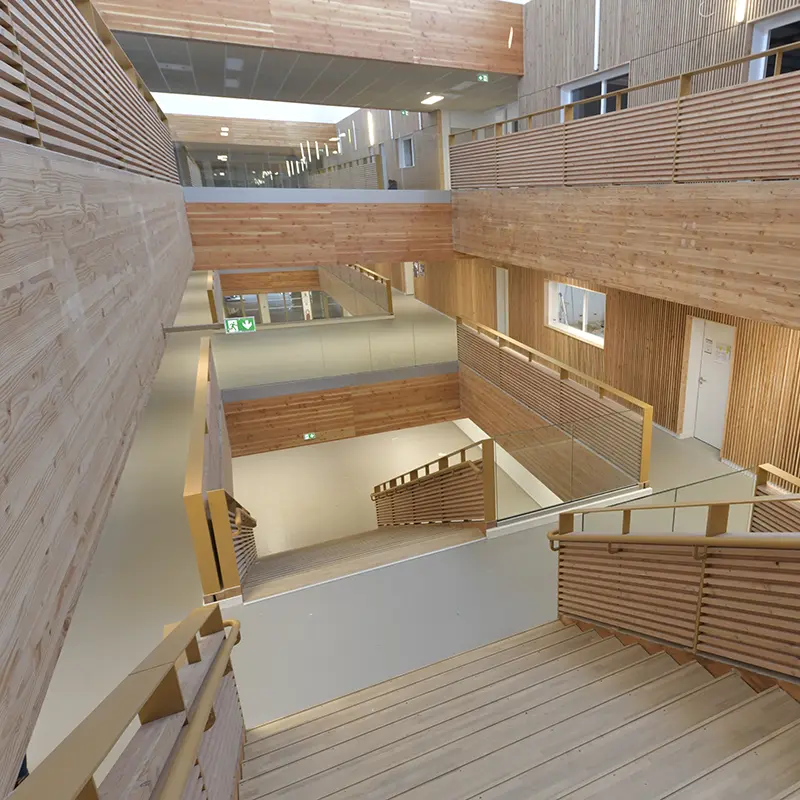 New build Off-site construction
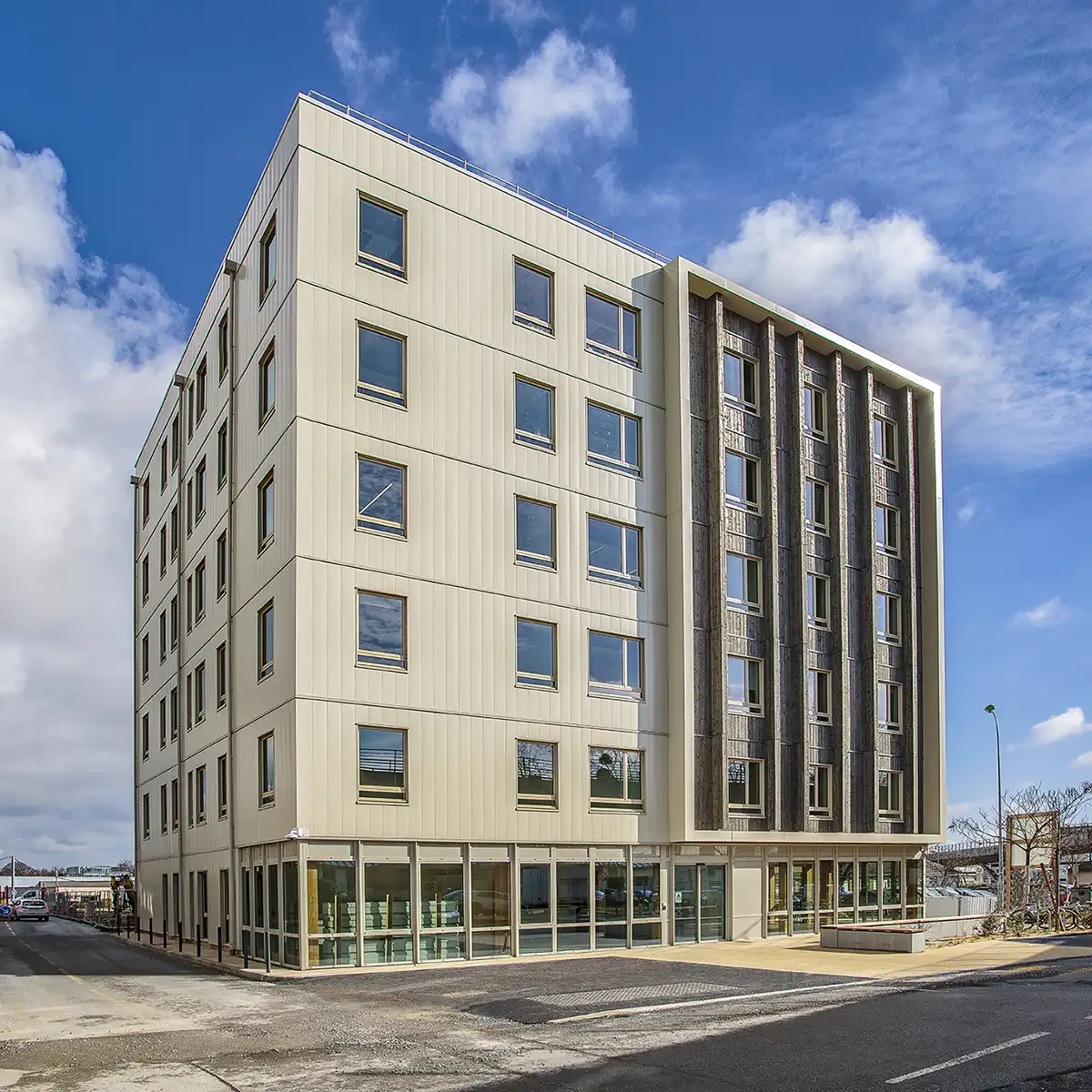
Clermont-Ferrand (Puy-de-Dôme) - Lycée Gergovie: a sustainable, low-carbon secondary school
The Lycée Gergovie building stands out for its innovative approach, combining the advantages of prefabrication with a strong commitment to the environment:
- Bio-based timber frame walls with straw insulation (Savare)
- Prefabrication of these walls in a dedicated workshop located less than 30 km from the construction site
- Selection of local materials (wood from the Massif Central and straw from Auvergne)
-
 New build Off-site construction
 -
 New build Off-site construction
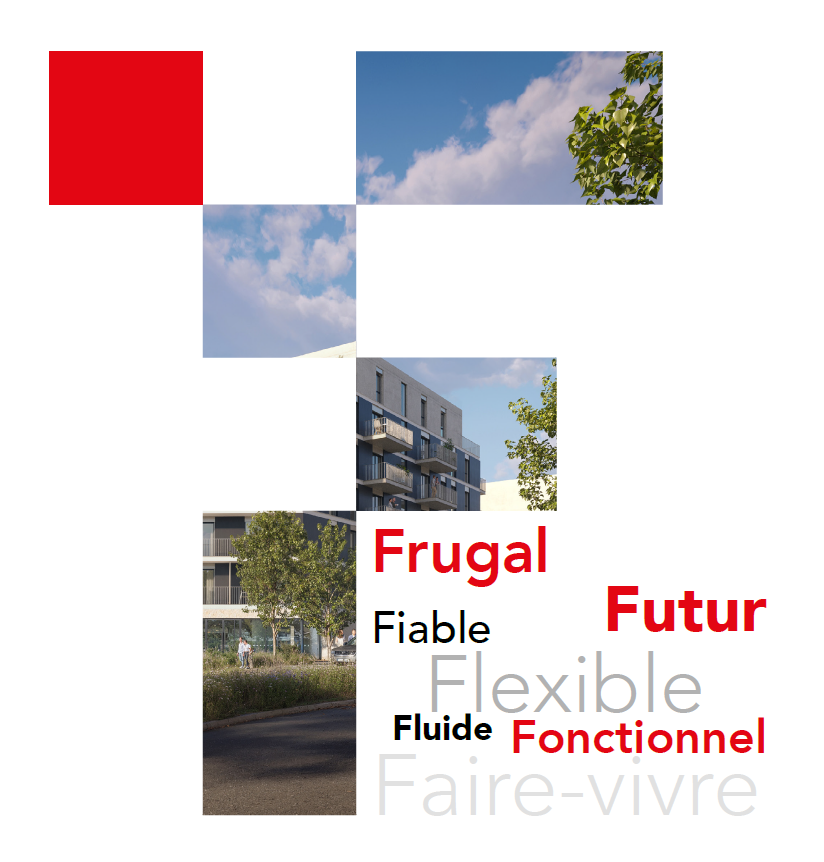
Concept F: The efficiency of an off-site, carbon-free model, the flexibility of a tailor-made project
The construction of affordable, sustainable and rapidly deliverable housing is now a crucial issue for local authorities and social landlords.
Concept F, developed by Eiffage Immobilier and Eiffage Construction in collaboration with the architectural firm Enia, offers a new model of customised off-site design and construction that can be fully adapted to local characteristics and specific requirements in order to respond quickly to the demand for high-performance, lower-cost housing.
To ensure full compliance with your project's real estate schedule, Concept F offers a high degree of freedom in terms of:
- the volume of the building,
- the type and orientation of the housing units, the choice of materials and finishes (facades and interior fittings),
- specific spaces (shops, covered parking on the ground floor, service rooms, etc.),
- the ability to change the interior layout of the housing units over the long term.
-
10% reduction in initial project costs
compared to a ‘traditional’ build
-
30% time saved
over the entire project
-
RE2020 thresholds 2028
Housing compliant with RE2020 thresholds 2028 and ahead of the 2031 thresholds
-
Adaptable housing
Housing that can be adapted throughout the building's lifetime