
Innovation at the service of the sustainable city
Whether it's called a post-carbon city, a low-carbon city or a smart city, the sustainable city of tomorrow must face the challenge of climate change, as well as the profound sociological changes in progress, in particular rising urban populations. All to serve the quality of life of users.
To meet this challenge, Eiffage Construction has entered the era of systemic analysis of the city and has engaged its research in a global approach, where progress is no longer measured by its technological advances alone but by solutions that address interdependent issues (environmental, economic, sociological).
Eiffage Construction has adopted an approach to sustainable urban development based on three components:
To encompass all the dimensions of the sustainable city, it considers all the components of the urban ecosystem: eco-mobility, housing, energy, waste, water, nature in the city, industry and materials.
Based on an in-depth analysis of the area at the heart of the urban project, the aim is to provide a range of solutions tailored to its specific climatic, geographical, cultural, human and economic characteristics.
The sustainable city and new technologies must serve the residents: this supposes that their quality of life must be at the heart of the approach, and not the promotion of technical solutions for their own sake.
Based on these three dimensions, Eiffage Construction supports towns and cities in their sustainable urban development strategy by delivering a 3D urban design tool suited to the scale of the building, the district or the town as a whole.
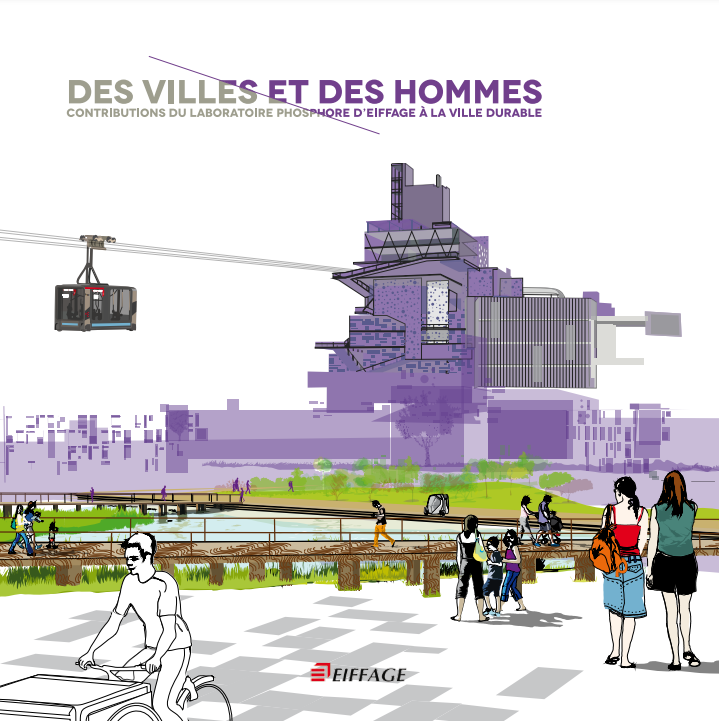
Phosphore: a laboratory for sustainable urban development
Created in 2007, the Eiffage Group's foresight laboratory is at the heart of Eiffage Construction's strategy to develop its business lines and its offering for urban stakeholders.
Phosphore acts as an ideas incubator, bringing together around thirty engineers from all Group divisions who have worked alongside architects, town planners, economists, sociologists, as well as climate and environmental experts.
Together, they have sought innovations that break away from conventional approaches. They have imagined and designed innovative, sustainable solutions for mobility, construction and spatial planning.
The Athletes' and Para-Athletes' Village
The Athletes' Village in Saint-Ouen is much more than just a temporary accommodation complex. It embodies a concrete vision of the sustainable city, an open-air laboratory where innovation and environmental responsibility come together to shape the future of our cities. This large-scale project is a testament to our commitment to building resilient, scalable living spaces that respect their environment.
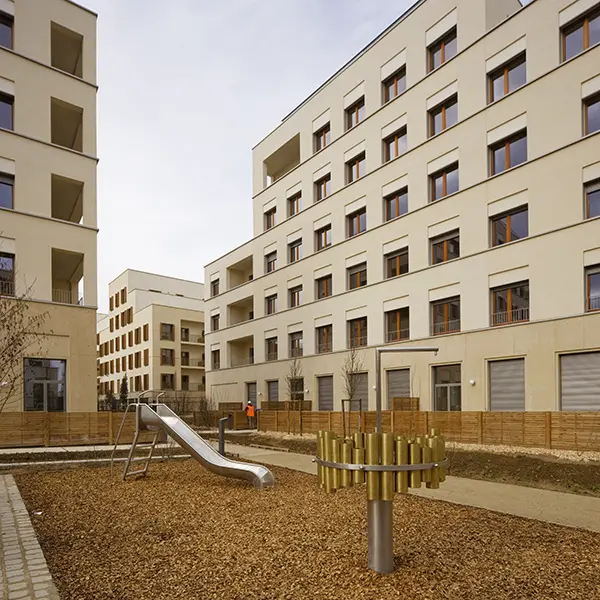
Innovations for sustainable performance:
This flagship project incorporates a multitude of innovations that exceed current standards. From optimised energy management to the use of low-carbon materials, rainwater harvesting systems and extensive greening, every construction choice has been guided by a requirement for maximum environmental performance. We have deployed advanced construction solutions to ensure optimal comfort for future residents while minimising the building's ecological footprint. The objective is clear: to create a model neighbourhood that anticipates the climate and social challenges of tomorrow.
Reversibility of housing, a signature for a sustainable legacy:
One of the major and iconic innovations of the Athletes' Village lies in the reversible design of its accommodation. Designed from the outset to serve a dual purpose, these buildings are designed to evolve effortlessly, transforming from accommodation for athletes to permanent housing for the residents of Saint-Ouen. This unique approach ensures that spaces can be easily converted (e.g. multiple rooms into family apartments), thereby limiting demolition and waste generation. Reversibility is not just an architectural principle; it is a pillar of the circular economy, ensuring that the initial investment benefits the community in the long term by adapting the building to future needs without distorting its essence. It is the promise of a concrete and useful legacy that extends the life of the neighbourhood well beyond the sporting event.
The Smartseille eco-district
The first tangible result of the research carried out at Phosphore was the design of Smartseille, a demonstrator for the Ecocité Euroméditerranée, a pioneering eco-district in the city of Marseille, destined to become a benchmark of French know-how in sustainable urban development.
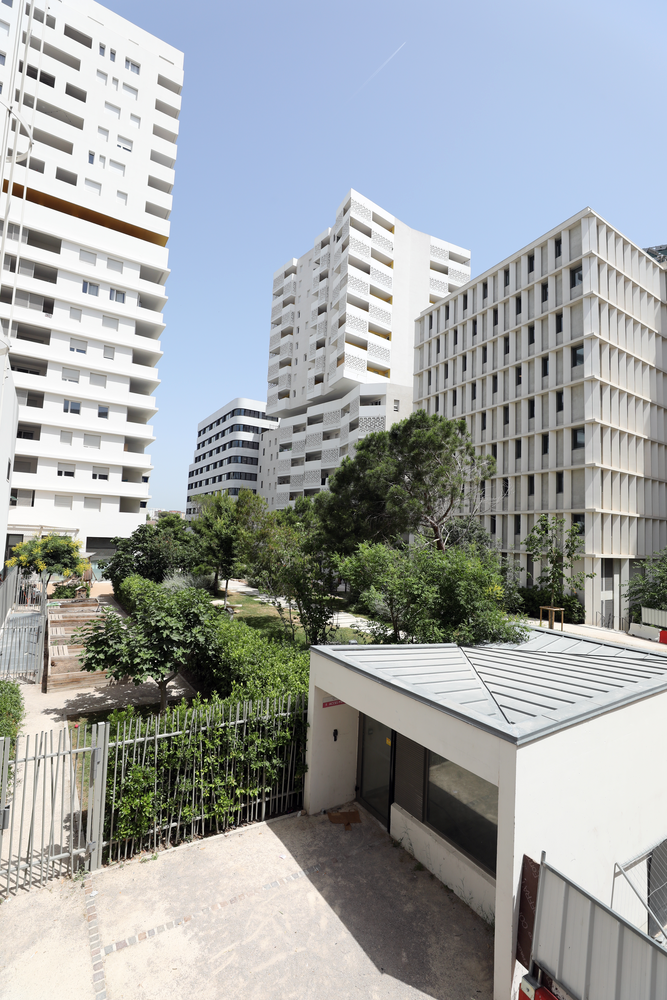
Launched in 2009, this pioneering eco-district project is a testing ground for design methods and innovations it generates. Located at the heart of the Marseille-Euroméditerranée Ecocity, Smartseille has been selected by the French government as an "industrial demonstrator for the sustainable city", and chosen to embody French expertise in sustainable urban development internationally.
Smartseille was designed with respect for the natural engineering of the location and according to the requirements of the systemic approach to sustainable development. It is a focus of innovations that meet three key challenges: ecological transition, better collective living, and the need for replicability.
Scalable housing, thermal sea power circuits, car-sharing, intergenerational residences, urban agriculture and neighbourhood concierge services: Smartseille is designed to create diversity, foster social cohesion, and support new ways of living and working.
The first buildings were delivered in 2016, and Smartseille is positioning itself both as a benchmark and as a source of best practices and replicable innovations, both in the Marseille metropolitan area and along the Mediterranean coast.
The LaVallée eco-district
Located in Châtenay-Malabry on the former site of école Centrale Paris, the future LaVallée eco-district (named after the founder of école Centrale, Alphonse LaVallée) is a focal point of low-carbon sustainable innovation.
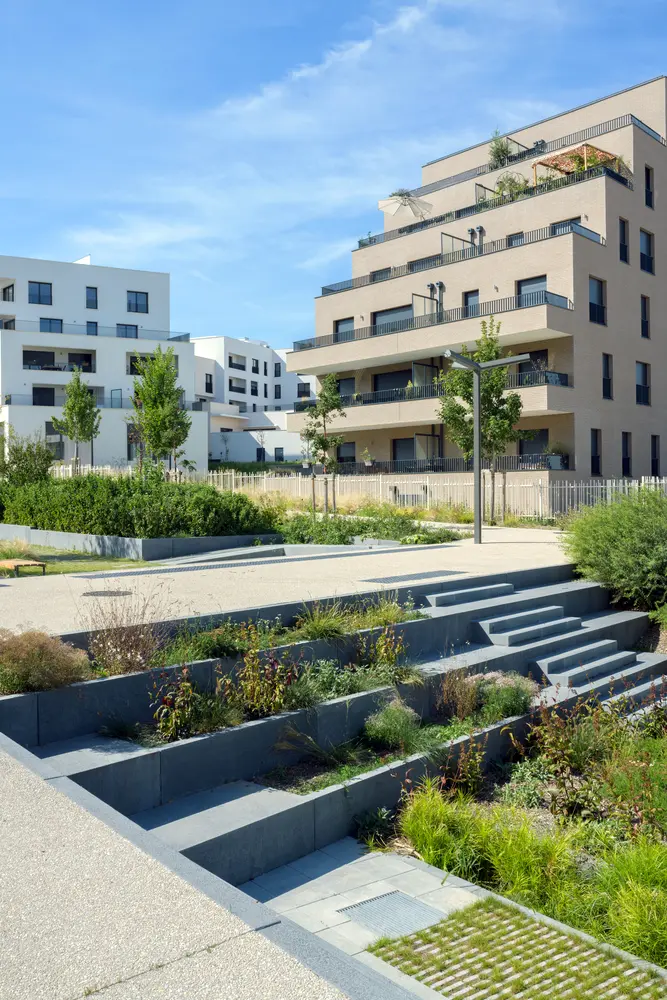
The project meets the écoQuartier certification requirements through four areas of sustainable urban development:
- low-carbon design;
- circular economy;
- nature in the city;
- new uses (urban and digital services).
The eco-district combines 2,200 homes, public facilities (a school complex, a crèche, a high school, an agricultural area, etc.), with around thirty shops and offices. The urban composition will give pride of place to nature, with 8 hectares of public spaces, including a planted promenade linking the Parc de Sceaux to the Coulée Verte.
As part of the Group's general low-carbon approach, the LaVallée eco-district, like Smartseille, is the direct, tangible result of the R&D work carried out by the Group's sustainable city laboratories.