
Modernising Europe's second largest port
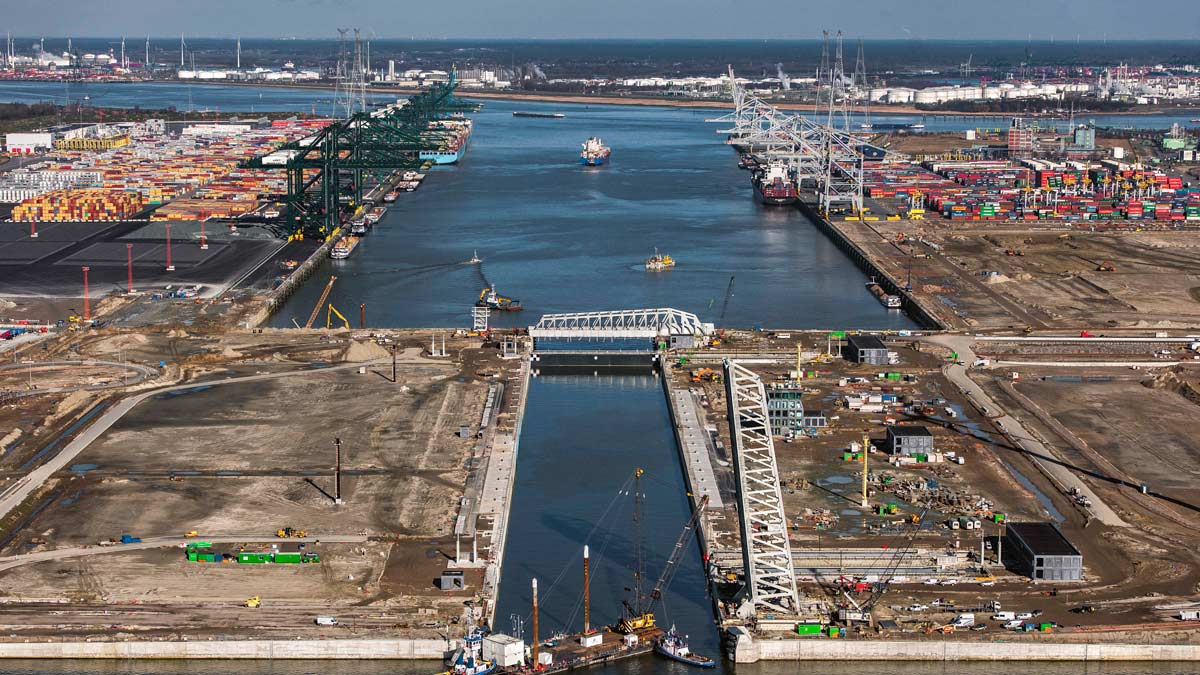
The docks in the port of Antwerp (Waaslandhaven) were already connected to the Scheldt by a lock, namely the Kallosluis. In service since 1979, this lock was limited in capacity and no longer fully met today's economic requirements.
With the new lock, the Flemish Region and the Antwerp Port Authority (Gemeentelijk Havenbedrijf Antwerpen) aim to ensure access to the docks on the left bank of the Scheldt.
The lock allows ships to travel from the Scheldt (with its tides) to the port docks, where the water level does not vary.
Building the world's largest lock
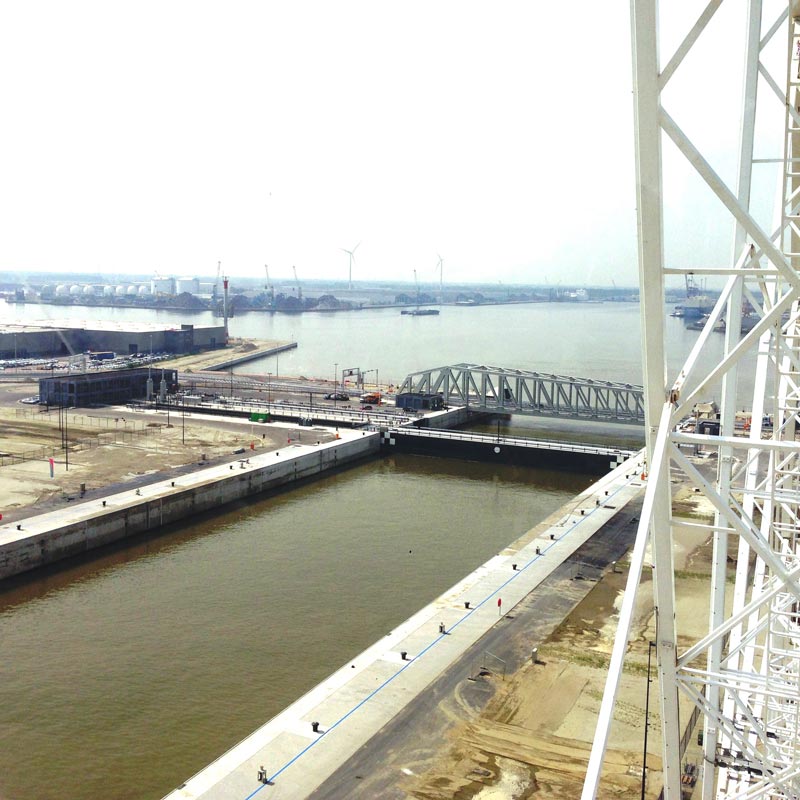
The construction of this lock in the docks of the port of Antwerp is a gigantic project.
With a length of 500 metres, the Kieldrechtsluis lock is the size of 28 buses parked end-to-end. At 68 metres wide, it is comparable to a 19-lane motorway!
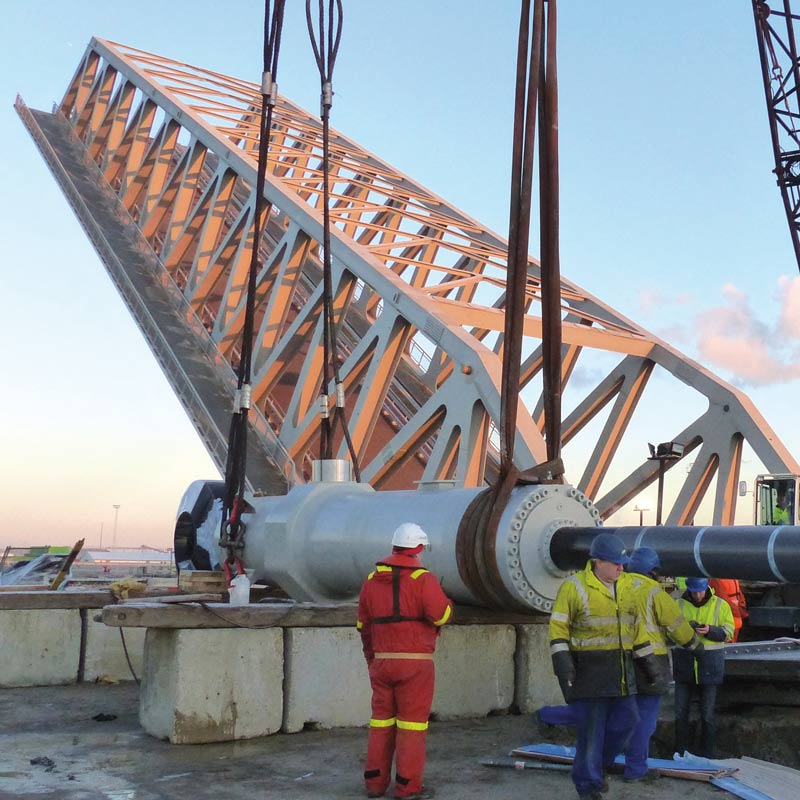
The construction of the lock, bridges and accessories required 22,000 tonnes of steel, three times more than the 7,300 tonnes of steel that make up the Eiffel Tower.
It is the largest lock in the world in terms of volume.
L’ élément suivant est une vidéo Watch a video of the project
Eiffage's maritime and river construction experts in action
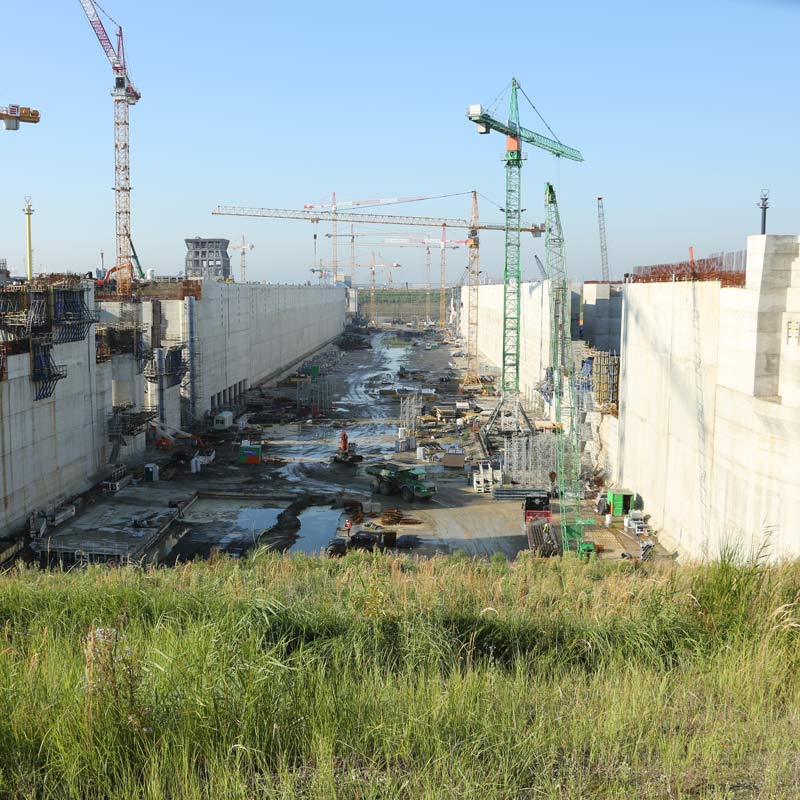
The five companies involved in the project include two experts in marine civil engineering works, both subsidiaries of Eiffage Benelux: Herbosch-Kiere and Antwerpse Bouwwerken.
Their professional management teams and highly skilled workers guarantee highly technical work.
Other members of the consortium were Jan De Nul, CEI-De Meyer and Betonac. The project was led by the by the temporary joint venture Waaslandsluis.
Project details
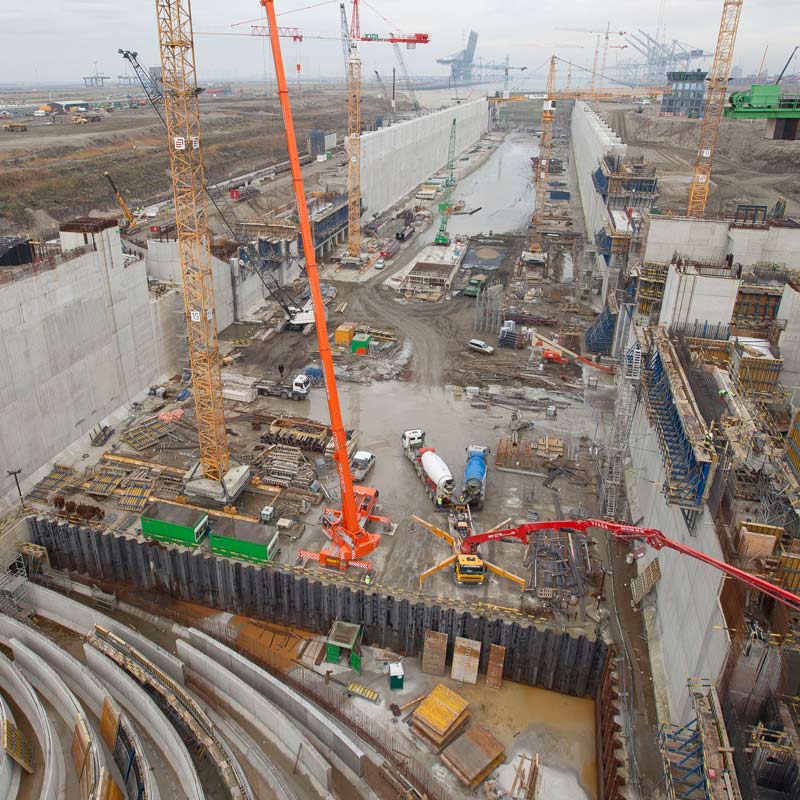
The bottom of the lock is 17.80 metres below sea level. Its depth allows it to accommodate the new generation of 14,000 TEU container ships (397.5 metres long x 56.4 metres wide, with a depth of 13.1 metres to 14.5 metres).
The lock consists of a central chamber and two sliding gates at either end. The gates run on a special support carriage on bottom rails and are supported by top rails. Power cables are used to control gate movements.
To avoid the lock disrupting road and rail transport in the Waaslandhaven, two mixed road/rail bridges will ensure the continuity of traffic over the lock as well as accessibility for businesses on the left bank of the Scheldt. These bridges are for pedestrians and cyclists.
Key figures
- Steel structure: 22,000 t
- Reinforced concrete: 795,000 m3
- Sheet piling: 50,000 m3
- Dry earthworks: 5,495,000 m3
- Wet earthworks: 50,000 m3
- Asphalt mattress: 44,000 m²
- Total cost: €273 million
- Eiffage Benelux amount: €91 million
- Delivery: June 2016